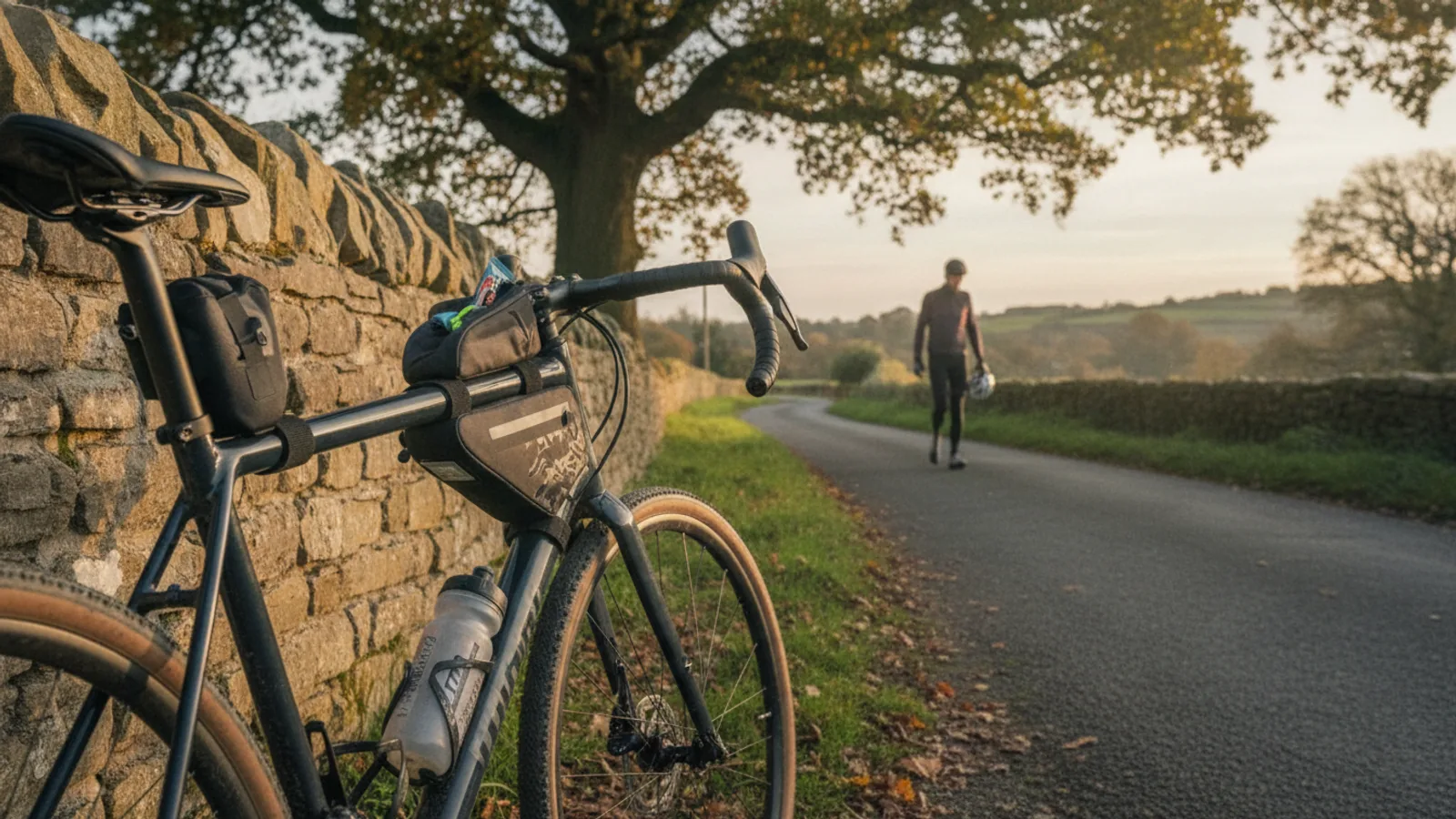
How Fast Do Electric Bikes Go
A practical step-by-step guide to how fast do electric bikes go, including preparation, instructions, common issues, tips, and next steps.

How Fast Do Electric Bikes Go
Electric bikes offer a fantastic boost to your cycling, making hills easier and commutes quicker. In Great Britain, the motor assistance on most legal electric bikes is limited to **15.5 mph (25 km/h)**. This guide helps you understand exactly what that speed limit means, how various factors affect your actual riding speed, and how to safely and legally get the most out of your e-bike. It's for anyone who owns an e-bike or is thinking of getting one and wants to understand its speed capabilities and legal requirements.
Fast Answer
- Legal Motor Assistance Limit (GB): 15.5 mph (25 km/h)
- Maximum Continuous Motor Power: 250 watts
Before You Start
- Your electric bike's user manual (if you have one)
- An understanding of basic road safety rules in Great Britain
- Your e-bike fully charged and in good working order
- Awareness of your local riding environment and traffic conditions
Step-by-Step Instructions
1. Understand the Legal Speed Limit for E-Bikes in Great Britain
In Great Britain, most electric bikes are classified as Electrically Assisted Pedal Cycles (EAPCs). To be an EAPC, your e-bike must meet specific legal requirements. The most important one for speed is that the electric motor must stop providing assistance once you reach **15.5 mph (25 km/h)**. This doesn't mean the bike can't go faster, but the motor won't help you once you hit that speed.
Another key rule is that the motor's continuous rated power output must not exceed **250 watts**. If your e-bike has a throttle, it should only assist up to **3.7 mph (6 km/h)** and only when you are also pedalling. EAPCs can be ridden by anyone aged 14 or over and do not require a licence, tax, or insurance.
2. Identify Your E-bike's Motor and Battery Specifications
Knowing your e-bike's specifications helps you understand its capabilities. Check your user manual or the labels on your bike for details about its motor and battery. The motor's wattage, usually **250 watts** for legal EAPCs in GB, indicates its power output. A higher wattage (if legal for your region) generally means more torque and quicker acceleration, but not necessarily a higher top motor-assisted speed due to legal limits.
Your battery's voltage (V) and amp-hours (Ah) are also important. While these primarily affect your e-bike's range (how far you can go on one charge), a higher voltage battery can sometimes deliver power more efficiently. Understanding these numbers helps you manage your expectations for speed and range.
3. Recognise How Terrain and Gradient Affect Your Speed
The type of ground you're riding on has a huge impact on how fast your electric bike goes. When you're riding uphill, the motor has to work much harder to assist you. This means your speed will naturally decrease unless you put in significant pedalling effort. Even with motor assistance, steep climbs will always slow you down.
On flat ground, your e-bike can more easily maintain its speed, allowing the motor to assist you smoothly up to the **15.5 mph** legal limit. Downhill is where you can often achieve your highest speeds, as gravity helps propel you. In these situations, you can easily exceed the motor-assisted limit by simply coasting or pedalling lightly.
4. Consider Rider Weight and Any Added Load
Your weight, plus the weight of anything you're carrying (like a backpack, groceries, or child seat), directly affects how much work your e-bike's motor needs to do. A heavier load requires more power from the motor and more effort from your legs to maintain a given speed. This means that with a heavier rider or more cargo, your e-bike might accelerate slower and reach the motor-assisted speed less easily.
Increased weight can also lead to faster battery drain, as the motor is working harder. Keeping your load lighter, especially when you want to cover longer distances or ride at a consistent pace, will help your e-bike perform more efficiently.
5. Factor in Tyre Pressure and Type
The condition and type of your e-bike's tyres play a significant role in how fast it goes. Properly inflated tyres reduce rolling resistance, which means less effort is required from both you and the motor to move forward. This translates to more efficient riding and helps you maintain speed more easily.
Different tyre types also impact speed. Narrower, smoother tyres (like those found on road or hybrid e-bikes) typically have less rolling resistance and are designed for speed on paved surfaces. Wider, knobbier tyres (common on electric mountain bikes) offer more grip for off-road trails but create more drag on tarmac, which can slightly reduce your top speed and efficiency.
6. Understand Your E-bike's Assistance Modes
Most electric bikes come with different levels of motor assistance, often called modes (e.g., Eco, Tour, Sport, Turbo, or similar names). These modes allow you to choose how much power the motor provides to help your pedalling. In 'Eco' mode, the motor gives minimal assistance, requiring more effort from you but conserving battery life. In 'Turbo' or 'Sport' mode, the motor provides maximum power, making it easier to accelerate and reach the **15.5 mph** limit quickly.
Switching between these modes lets you tailor your ride to different situations. You might use 'Eco' on flat paths to save battery, and 'Turbo' for climbing steep hills or getting a quick boost from a standstill. While higher modes help you reach the speed limit with less effort, they will drain your battery faster.
7. Practice Safe Riding Habits for Different Speeds
Regardless of how fast your electric bike goes, safety should always be your top priority. Always wear a helmet that fits correctly and meets safety standards. Electric bikes can accelerate quickly and reach speeds that might feel unfamiliar if you're used to a traditional bicycle. This means you need to be extra aware of your surroundings, especially when riding in traffic or on shared paths.
Understand that higher speeds require longer stopping distances. Practice your braking technique so you can stop smoothly and safely when needed. Be particularly careful when riding downhill, as you can easily exceed the motor's assistance limit, and you'll be relying solely on your brakes and riding skill to control your speed. Always keep an eye out for pedestrians, other cyclists, and vehicles.
Common Problems When You Use an Electric Bike
E-bike Feels Slow or Doesn't Reach Expected Speed
Sometimes, your e-bike might not feel as fast as you expect, or it struggles to reach the **15.5 mph (25 km/h)** motor-assisted limit. This can be frustrating, but there are usually simple explanations.
Fix: First, check your battery level. A low battery will significantly reduce motor performance. Next, ensure your tyre pressures are correct (see Step 5). Under-inflated tyres create a lot of drag. Also, verify that you are in an appropriate assistance mode; 'Eco' mode will naturally feel slower than 'Turbo'. Remember that terrain and rider weight also impact perceived speed. If it's a new bike, ensure you're familiar with the legal limitations on motor assistance.
Battery Drains Too Quickly
If you find your battery isn't lasting as long as you expect, it can limit your ability to ride at desired speeds for your whole journey. This often leads to running out of assistance mid-ride.
Fix: The most common reason for quick battery drain is frequent use of higher assistance modes (like 'Sport' or 'Turbo'), especially on hilly routes. Try using lower assistance modes ('Eco' or 'Tour') more often, particularly on flat sections or when you're not in a hurry. Also, ensure your tyres are properly inflated and your bike is well-maintained, as these factors improve efficiency and reduce battery strain. Extreme cold weather can also temporarily reduce battery performance.
Bike Feels Unstable at Higher Speeds
While e-bikes provide assistance up to a certain speed, you might find the bike feels wobbly or unstable if you're pedalling much faster or riding downhill at speed. This can be concerning and dangerous.
Fix: First, ensure your e-bike is properly maintained. Check that your wheels are true (not bent), that all bolts are tight, and that the steering headset has no play. Tyre pressure can also affect stability; avoid over-inflating or under-inflating. Ensure your bike is the correct size for your body. Most importantly, practice safe riding techniques (see Step 7), keeping a relaxed grip on the handlebars and looking ahead. If instability persists, have a qualified bike mechanic inspect your e-bike.
Uncertainty About the Legality of My E-bike's Speed
Some riders might worry if their electric bike is truly legal on public roads in Great Britain, especially if they see other bikes that appear faster or have throttles.
Fix: Always refer back to the EAPC regulations for GB (see Step 1). For legal public road use without a licence, tax, or insurance, your e-bike must have a maximum continuous rated motor power of **250 watts** and its motor assistance must cut out at **15.5 mph (25 km/h)**. If your e-bike exceeds these specifications, it's legally considered a moped or motorcycle. This means it requires registration, tax, insurance, and a valid driving licence. Do not ride an unregistered, uninsured, or untaxed electric vehicle on public roads if it doesn't meet EAPC requirements.
Advanced Tips for Your Electric Bike's Speed
Optimise Your Pedalling Cadence
Many e-bike riders focus too much on just letting the motor do the work. However, maintaining an optimal pedalling cadence (the speed at which you pedal) can greatly improve efficiency and actual speed. Aim for a comfortable, consistent cadence, typically between **60 and 90 revolutions per minute (RPM)**. This allows the motor to work efficiently, complementing your effort rather than fully replacing it. A smoother cadence reduces strain on the motor and yourself, helping you maintain higher speeds more easily up to the **15.5 mph** limit.
Master Gear Shifting
Just like a traditional bicycle, proper gear selection is crucial for electric bikes. Using the right gear allows you to maintain an optimal cadence (as mentioned above) and helps the motor work more efficiently. On inclines, shift to an easier gear before you start to struggle; this reduces the load on the motor and your legs, helping you maintain speed. On flat ground or when accelerating, shift to a harder gear once you've gained momentum to keep pedalling effectively and increase your speed beyond the motor's assistance limit.
Improve Your Riding Aerodynamics
While an electric bike is not a racing machine, your body position can still impact how fast you go, especially at higher speeds or when you're pedalling without motor assistance. Reducing your frontal area by tucking in slightly – bending your elbows and lowering your torso – minimises wind resistance. This small change can make it easier to maintain speed, particularly on flat sections or when you're pushing past the **15.5 mph** limit under your own power. Even small aerodynamic improvements contribute to more efficient riding.
Plan Routes for Efficiency
If speed and consistent performance are important to you, consider planning your routes. While e-bikes make hills much more manageable, frequently tackling very steep or long climbs will always reduce your average speed and drain your battery faster. Utilise online maps or cycling apps to find routes that suit your speed preferences. Choosing flatter paths or routes with gradual inclines can help you maintain higher average speeds and make the most of your motor's assistance and battery life.
Perform Regular Maintenance
A well-maintained electric bike performs better and is more efficient. Regularly clean and lubricate your chain, check your brakes for proper adjustment, and ensure all moving parts are smooth. A gritty chain or sticky brakes can create drag, forcing the motor to work harder and reducing your effective speed. A smooth-running bike allows the motor to deliver its power more efficiently, helping you maintain optimal speeds and battery range.
Quick Reference
| Situation | Use this | Why |
|---|---|---|
| Want to go faster uphill | Shift to an easier gear and use a higher assistance mode (e.g., 'Sport' or 'Turbo'). | Reduces strain, maintains momentum, and allows motor to assist more effectively. |
| Trying to conserve battery life | Use lower assistance modes (e.g., 'Eco') and pedal more actively. | Less motor output means the battery lasts longer, increasing range. |
| Bike feels sluggish | Check tyre pressure, battery charge, and current assistance mode. | These are common causes of reduced performance; fixing them can restore speed. |
| Concerned about legal speed limits | Remember the 15.5 mph (25 km/h) motor cut-off and 250W power limit for EAPCs in GB. | Ensures your bike is legal for public roads without licence/tax/insurance. |
| Riding at high speeds (e.g., downhill) | Maintain a relaxed grip, look ahead, and practice smooth braking. | Enhances stability and safety when relying on your own speed and braking. |
How Fast Do Electric Bikes Go FAQ
Q: Can I legally modify my e-bike to go faster?
A: In Great Britain, modifying an EAPC to exceed the **15.5 mph (25 km/h)** motor assistance limit or the **250 watts** continuous power limit means it is no longer legally an EAPC. It would then be classified as a moped or motorcycle. This change in classification means it would require proper registration with the DVLA, vehicle tax, motor insurance, and the rider would need a valid driving licence. Riding a non-compliant modified e-bike on public roads without these requirements is illegal and can lead to significant penalties, including fines, penalty points, and even confiscation of the vehicle.
Q: Do all electric bikes have the same speed limit?
A: For an electric bike to be legally considered an Electrically Assisted Pedal Cycle (EAPC) in Great Britain, it must adhere to the **15.5 mph (25 km/h)** motor assistance cut-off and a maximum continuous rated motor power of **250 watts**. Therefore, most electric bikes sold as 'e-bikes' for general public use will have this speed limit for motor assistance. However, there are other types of electric vehicles, such as 'speed pedelecs' (which can assist up to 28 mph) or electric motorcycles, but these are subject to different, stricter laws and require licensing, insurance, and tax, similar to mopeds or motorcycles.
Q: How does a throttle affect the speed of an e-bike?
A: For an electric bike to remain an EAPC in Great Britain, any throttle fitted must only provide assistance up to a maximum speed of **3.7 mph (6 km/h)**. Crucially, this throttle assistance is only allowed if the pedals are also being used. This means that a throttle cannot propel the bike solely under its own power above walking speed. If an e-bike has a throttle that can propel it faster than 3.7 mph without pedalling, or a full-speed throttle, it would likely be reclassified as a moped or motorcycle and would require all the associated legal requirements.
Q: What's the difference between motor-assisted speed and my actual top speed?
A: The **motor-assisted speed** is the specific speed at which your e-bike's electric motor stops providing power (legally **15.5 mph / 25 km/h** in GB for EAPCs). This is the point where the motor 'cuts out'. Your **actual top speed**, however, is how fast you can go in total. This includes the motor assistance up to its limit, combined with your own pedalling power, and external factors like gravity when going downhill. You can absolutely exceed 15.5 mph by pedalling harder, by coasting downhill, or a combination of both; the motor just won't be helping you beyond that point.
Q: Does battery size affect how fast an e-bike goes?
A: Generally, battery size, measured in Amp-hours (Ah) or Watt-hours (Wh), primarily affects the *range* of your e-bike – that is, how far you can travel on a single charge. A larger battery allows you to ride for longer distances or use higher assistance modes for extended periods. It does not typically increase the *top motor-assisted speed* of the e-bike itself, as that is governed by the motor's design and the legal regulations (the **15.5 mph** cut-off in GB). However, a larger battery ensures the motor can deliver consistent power for longer, helping you maintain speed over a longer journey.
Final Checklist for How Fast Do Electric Bikes Go
- ✓ Understand the **15.5 mph (25 km/h)** legal motor assistance limit for EAPCs in Great Britain.
- ✓ Confirm your e-bike meets the **250 watts** continuous rated power requirement for legal public road use.
- ✓ Regularly check and maintain correct **tyre pressure** for optimal efficiency and speed.
- ✓ Familiarise yourself with your e-bike's **assistance modes** and choose them appropriately for your ride.
- ✓ Always wear a properly fitted **helmet** and practice safe riding habits, especially at higher speeds.
- ✓ Keep your electric bike **well-maintained** (clean chain, adjusted brakes) for the best performance and safety.
- ✓ Be aware of **local traffic laws** and ride considerately with other road and path users.
- ✓ Adjust your expectations for speed based on **terrain, rider weight, and weather conditions**.