Roundup review
For our 2026 guide, we analysed over 20 of the UK's most popular riding helmets, scrutinising safety certifications, fit systems, ventilation performance, and long-term durability reports. Our evaluation process combines official specifications with patterns from rider feedback to identify the gear that truly performs in British conditions. The clear winner for its unmatched combination of triple-standard safety, MIPS technology, and all-day comfort is the Champion Revolve X-Air MIPS.
Quick Comparison
Champion Revolve
- Triple-standard safety
- MIPS protection layer
- Superb ventilation
Charles Owen Ayr8
- Premium competition look
- Excellent harness system
- Kitemarked to PAS015
Uvex Exxential II
- Extremely lightweight
- Superb 3D fit system
- Best-in-class airflow
Gatehouse Conquest
- Unbeatable value
- Kitemarked to PAS015
- Durable, simple design
Champion Junior X-Air
- Dial-fit for growth
- Lightweight & comfortable
- Meets core safety specs
The Best Horse Riding Helmet Shortlist
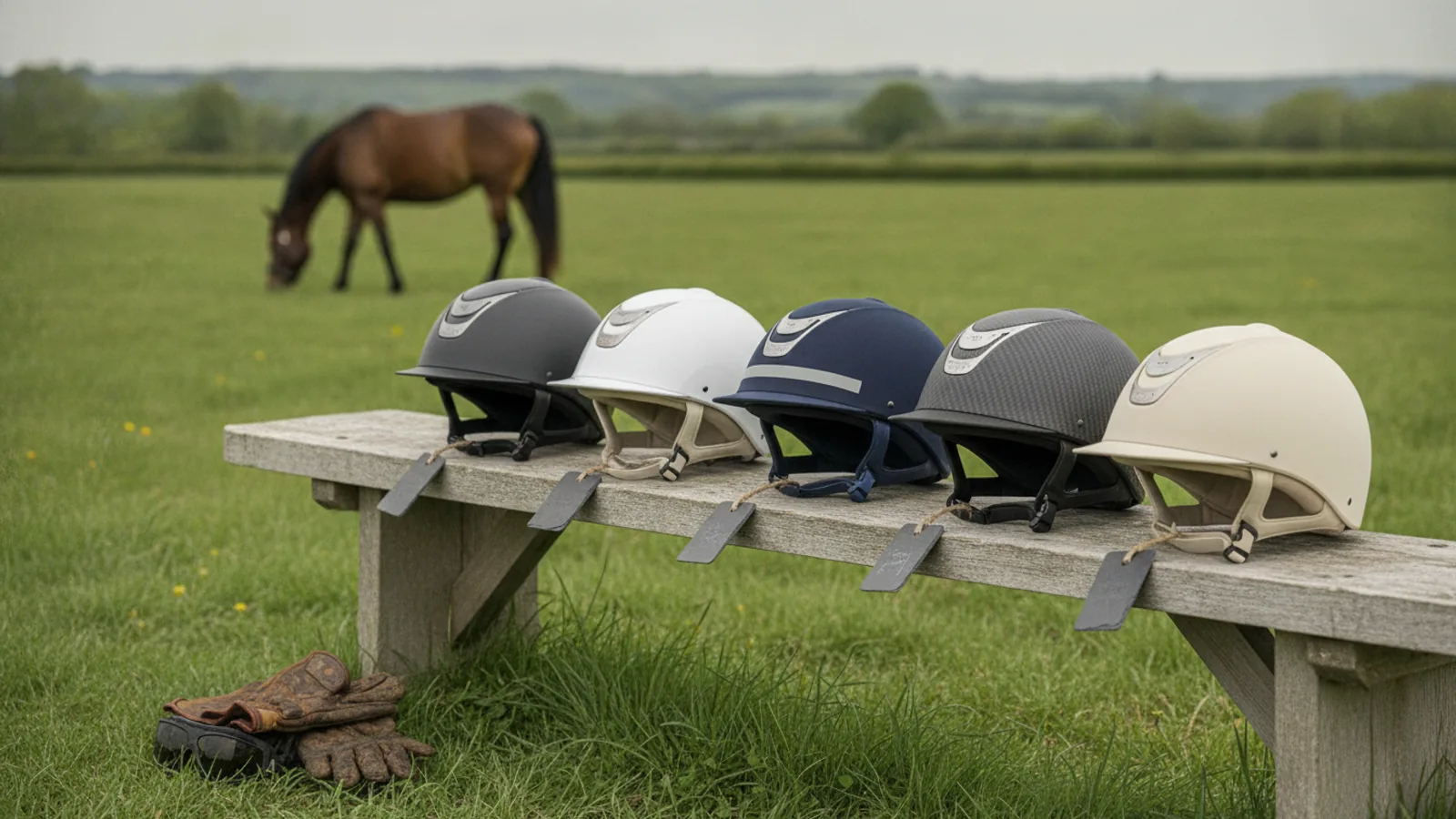
- Champion Revolve X-Air MIPS - Best Overall
- Charles Owen Ayr8 Plus Leather Look - Best for Competition
- Uvex Exxential II MIPS - Best for Trail & Hot Weather
- Gatehouse Conquest MKII - Best on a Budget
- Champion Junior X-Air Plus - Best for Growing Riders
Champion Revolve X-Air MIPS
The Champion Revolve X-Air MIPS is our top pick because it leaves no stone unturned in the pursuit of safety and comfort. It's one of the few helmets on the market that is kitemarked to three leading international safety standards (PAS015:2011, VG1 01.040 2014-12, and ASTM F1163:2015) and incorporates the MIPS Brain Protection System. This isn't just box-ticking; it's a commitment to comprehensive protection. In the field, its high-flow ventilation channels are immediately noticeable, making it comfortable for everything from a strenuous cross-country school to a gentle hack on a warm day. The dial-fit system and breathable padded lining ensure a secure, custom-feeling fit without pressure points. For the serious amateur rider who does a bit of everything, this helmet offers top-tier, competition-ready protection without the specialist price tag.
Pros
- Triple-standard safety certification offers maximum peace of mind
- MIPS technology helps reduce rotational forces during an impact
- Excellent ventilation for all-day comfort in varied conditions
- Precise dial-fit system for a secure and comfortable fit
Cons
- Bulkier profile than some premium, show-ring specific models
- Higher price point than entry-level helmets
Charles Owen Ayr8 Plus Leather Look
When presentation matters as much as protection, the Charles Owen Ayr8 Plus is the go-to choice for competitors across the UK. Its elegant, low-profile design finished in a smart leather-look material meets the exacting aesthetic standards of the dressage and show jumping arenas. But this helmet is far from just a pretty face. It is kitemarked to PAS015:2011 and VG1, providing trusted protection. The standout feature is the six-point GRpx® harness, which offers unparalleled stability and security, ensuring the helmet stays exactly where it should. While ventilation is good for a competition helmet, with front and rear ports, it doesn't match the airflow of trail-focused models. It’s an investment, but for riders serious about competing, the combination of classic style, superior fit, and certified safety is hard to beat.
Pros
- Sleek, traditional look suitable for high-level competition
- Exceptional GRpx® harness system provides a very stable fit
- Kitemarked to PAS015:2011 for proven safety
- Removable liner for easy cleaning
Cons
- Premium price point reflects its specialist nature
- Ventilation is adequate but not exceptional for hot weather
- Does not include MIPS technology
Uvex Exxential II MIPS
For riders who spend long hours on the trail, especially during the warmer months, the Uvex Exxential II MIPS is a game-changer. Its primary focus is on weight reduction and maximum airflow, and it delivers on both fronts exceptionally well. The inmould construction makes it feel feather-light on the head, reducing fatigue on all-day rides. The ventilation system is a true standout, with large, well-placed vents that actively channel air over the scalp. Uvex's 3D IAS fit system allows for fine-tuning of not just the circumference but also the height, accommodating different head shapes and ponytails with ease. It meets the VG1 safety standard and adds MIPS for extra protection, making it a safe choice for hacking and endurance. While it may not have the traditional look for the show ring, for pure riding comfort, it's in a class of its own.
Pros
- Incredibly lightweight design minimises neck fatigue
- Best-in-class ventilation system for superior cooling
- Advanced 3D dial-fit system provides a highly customisable fit
- Includes MIPS for enhanced rotational impact protection
Cons
- Not kitemarked to PAS015, which may be a requirement for some UK clubs
- Modern, sporty aesthetic isn't suitable for traditional disciplines
Gatehouse Conquest MKII
The Gatehouse Conquest MKII proves that certified safety doesn't have to come with a hefty price tag. This helmet is a workhorse, offering everything a rider needs for everyday schooling, hacking, and Riding Club activities. Crucially, it is kitemarked to PAS015:2011 and VG1, meeting the safety requirements of most UK equestrian bodies. The design is simple and functional, with a lightweight outer shell and a comfortable, moisture-wicking padded liner. While the dial-fit system is more basic than premium models, it provides a secure fit for most head shapes. Ventilation is adequate for general use, though it can feel warm on very hot days. For new riders, those on a budget, or as a reliable second helmet for everyday use, the Conquest MKII offers unbeatable value and properly certified protection.
Pros
- Excellent value for a fully certified helmet
- Kitemarked to PAS015:2011, making it suitable for most competitions
- Lightweight and comfortable for everyday riding
- Simple, durable, and easy-to-clean design
Cons
- Ventilation is less effective than in higher-end models
- Basic fit system may not suit all head shapes perfectly
- Lacks advanced features like MIPS
Champion Junior X-Air Plus
Finding a safe, comfortable, and affordable helmet for a child is a top priority, and the Champion Junior X-Air Plus excels here. Its key feature is the adjustable dial-fit system, which allows the helmet to expand as the child grows, ensuring a secure fit and extending the helmet's usable life. It's incredibly lightweight, a crucial factor for younger riders to prevent discomfort and fatigue. Safety is paramount, and this helmet is tested to PAS015:2011, providing the protection required by The Pony Club and other youth organisations. The fun, modern designs are a hit with kids, encouraging them to actually wear their helmet without argument. While it lacks the premium finish of adult models, it provides exactly what's needed: certified safety in a lightweight, adjustable, and kid-friendly package.
Pros
- Dial-fit system accommodates a growing child's head
- Lightweight construction enhances comfort for young riders
- Certified to PAS015:2011, meeting Pony Club requirements
- Good ventilation and a removable, washable liner
Cons
- Styling is specifically for the youth market
- Basic harness system compared to adult helmets
Final Verdict: Best Horse Riding Helmet
After thorough analysis of the UK market, the Champion Revolve X-Air MIPS stands out as the best horse riding helmet for most riders in 2026. Its uncompromising approach to safety, combining triple-standard certification with MIPS technology, offers a level of protection that is hard to surpass. This, paired with its excellent ventilation and a secure dial-fit system, makes it a versatile, comfortable, and highly protective choice for nearly every equestrian discipline. If you need one helmet that can do it all with maximum peace of mind, this is the one to get.
Best Horse Riding Helmet 2026 FAQ
What is the safest horse riding helmet standard in the UK?
The PAS 015:2011 standard, especially when accompanied by the BSI Kitemark, is generally considered one of the most comprehensive and trusted standards for UK riders. It involves rigorous testing for impact, penetration, and harness security. Many competitive bodies in the UK mandate a helmet meeting this standard.
Can I wear a bicycle helmet for horse riding?
No, you should never wear a bicycle helmet for horse riding. Riding helmets are specifically designed and tested for the types of falls and impacts common to equestrian sports, such as a fall from height onto a hard or uneven surface, or a potential kick from a hoof. Bicycle helmets are designed for different impact scenarios and do not offer adequate protection.
How do I know if my riding helmet fits properly?
A well-fitted helmet should be snug with no gaps, sit level on your head (about an inch above your eyebrows), and not move when you shake your head. The chinstrap should be tight enough that you can only fit one finger underneath it. Always try a helmet on before buying if possible, as different brands fit different head shapes.
How often should I replace my riding helmet?
You must replace your helmet immediately after any impact, including dropping it on a hard surface, as the damage may not be visible. Otherwise, you should replace it every five years from its first use, as the protective materials degrade over time. Check the manufacturing date inside the helmet when you purchase it.